


II Corinthians 6:16–18; 7:1
Brethren, you are the temple of the living God; as God said, “I will live in them and move among them, and I will be their God, and they shall be my people. Therefore come out from them, and be separate from them, says the Lord, and touch nothing unclean; then I will welcome you, and I will be a father to you, and you shall be my sons and daughters, says the Lord Almighty.” Since we have these promises, beloved, let us cleanse ourselves from every defilement of body and spirit, and make holiness perfect in the fear of God.
Saint Paul reminds us that we “are the temple of the living God.” And then, having reminded us of God’s promise to live in us and move among us, to be our God and our Father, he says:
“Since we have these promises, beloved, let us cleanse ourselves from every defilement of body and spirit, and make holiness perfect in the fear of God.”
—II Corinthians 7:1
I would like to offer a meditation on that holiness, with some help from Saint John Chrysostom.
And I would like to begin with the reminder that holiness is real. It is the presence and action of God in our lives. It shines like light, driving back the darkness. It radiates like warmth, driving back the cold.
To be a bit less abstract, it is the kindness that transforms and drives back hatred, manipulation, and apathy. It is the humility that transforms and drives back pride. It is the hope that transforms and drives back despondency.
These are the fruits of God’s presence within us, as we learn to cooperate with His grace.
And it matters. It matters to the people who live with us, to the people who work with us, to the people who depend on us. When we grow in holiness, we become a blessing to them, to the world.
We know this. We know what it is like to be around someone whose peace and patience help us become peaceful and patient ourselves. And we know what it is like to be around someone whose anger puts everyone on guard.
We have been both of those people. I know I have. We have done damage to ourselves and those around us; but we were called to heal, to strengthen, and to serve.
There is no such thing as private virtue, any more than there is such a thing as private sin. What we cultivate within ourselves naturally affects the people around us. This is the power God has given us as His imagers on this earth.
We can put on a good show. We can explain our intentions. We can justify what we do and say. But we and the people who live with us still have to live with the consequences.
So becoming holy matters. And becoming holy requires effort.
But notice where Saint Paul begins. “You are the temple of the living God.”
God has already acted. He has drawn us to Himself. He has given us His promises. He calls us His sons and daughters. Our struggle for holiness begins with that gift, with that relationship, with that love.
We can put Saint John Chrysostom’s reminder simply:
Remember Who dwells in you.
When you are preparing to say something about your neighbor, remember Who dwells in you. When you are deciding what to do with your time, your attention, or your money, remember Who dwells in you.
You are a temple. And the way we live should reflect the holiness of the One who has made His home within us.
We also hear the command to “come out from them, and be separate.” This separation requires us to turn away from the sins that damage our neighbors, even as we draw near to those neighbors in love.
Now, we can hear this and immediately think of certain sins, things that do not belong in the temple. And rightly so. There are things that we do with our bodies that are incompatible with the life God has called us to. We need to repent of those things. We need to stop doing them.
But Saint Paul says “body and spirit.” And Chrysostom makes sure we do not rush past that second part. He names malice, deceit, envy, pride, and vainglory.
Let’s take the last one: vainglory. The desire to be seen and admired. The desire to have other people recognize how good we are.
This is where things become difficult, because that desire can attach itself to the very things we are doing to become holy.
We can fast and become proud of our discipline. We can learn the faith and become contemptuous of people who know less than we do. We can defend something true and take pleasure in humiliating the person who got it wrong.
The outward action may be defensible. Something good may even be accomplished. But there is also something that needs correction, something within us that needs healing. And the damage grows when we allow that passion to distort our relationships.
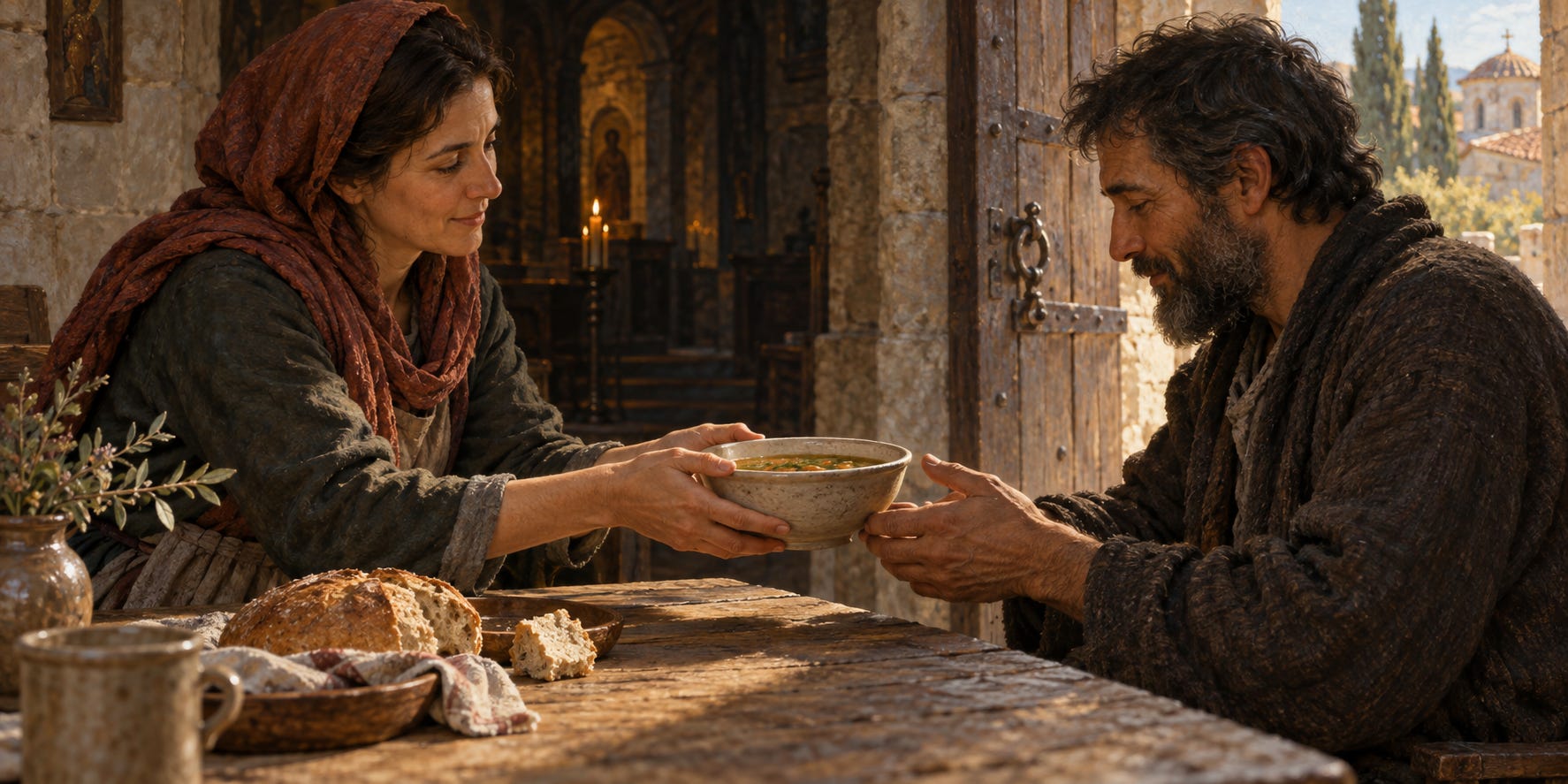
Chrysostom’s example is almsgiving.
Someone comes to us hungry, and we give him food. Glory to God. We have met a real need. But Saint John Chrysostom asks us to examine our hearts even here.
Are we giving out of mercy? Are we attending to the real needs of this person? Or have we found an opportunity to show everyone how generous we are?
Because if we use our brother’s need to advertise our goodness, we may give him money or food while taking away his dignity.
And Chrysostom points out that the damage can go even further. Once we have publicized our generosity and the way we fixed everything, other people may assume that this person has everything he needs. They may stop helping. They may even condemn him if he asks for help again.
We wanted credit for doing something good. Our neighbor, who is still in need, gets to live with the consequences.
Our giving can reveal both our desire to be admired and our difficulty letting go of what we have.
And this is where Chrysostom’s warning about wealth becomes so practical. The more we have, the easier it can become to organize our lives around keeping that wealth and getting more. We become practiced at recognizing what we want, while becoming less attentive to what our neighbor needs.
This is a serious warning. And it brings us back to something we have talked about many times: we are poor judges of our own actions and intentions.
We know how to explain ourselves. We know how to describe our anger as concern, our pride as conviction, and even our desire for praise as the desire to set a good example. We have big brains; we can justify pretty much anything.
Sometimes those descriptions are true and useful. Sometimes they are excuses to cover our sin. And we need help telling the difference.
This is one reason the life of the Church is so concrete. We have commandments. We have prayer and fasting. We have confession. We have spiritual guidance and a community in which we can learn to receive loving, supportive, and necessary correction.
These things help us see what we would otherwise overlook. They give us a way to repent of things that, if we even notice them, we have become very good at justifying.
But Chrysostom takes us a step further. Avoiding evil does not complete the work of holiness. We must cultivate goodness. We must become attentive, earnest, and faithful in our love of God and neighbor.
It is certainly good to stop speaking cruelly. We also need to learn how to speak with kindness.
It is certainly good to stop taking what belongs to others. We also need to learn how to share what has been entrusted to us.
It is certainly good to recognize our pride. We also need to practice humility, including the humility of doing something good without receiving credit for it.
So let us be concrete.
When we give, whatever it is that we offer, let us consider the dignity of the person receiving. When we correct someone, let us attend first to whether our words will actually help. When we are tempted to describe someone else’s faults, let us first examine our own.
And let us do some good that we are willing to leave unadvertised.
God sees it. The person receiving it benefits from it. Let that be enough.
This is part of making holiness perfect “in the fear of God.” We learn to live with an awareness of His presence. We take His love seriously. We take seriously the people He has entrusted to our care.
We remember that God sees what we have learned to hide, even from ourselves, and we allow His judgment to correct our own.
Remember Who dwells in you.
And when this work, this remembering, reveals something ugly within us, something selfish or proud, let us bring it to Christ. He already knows it is there. He loves us, and He desires our healing.
He is the source of our holiness. We cannot become the men and women we are called to be on our own. We need His mercy. We need His strength. We need His life within us.
And that is God’s promise to us, which Saint Paul reminds us of today:
“I will live in them and move among them.”
“I will be a father to you, and you shall be my sons and daughters.”
Since we have these promises, beloved, let us do the work. Let us repent. Let us receive correction. Let us practice mercy.
And through the grace of our Lord Jesus Christ, the One who lives within us, let us become a blessing to the people around us: a visible sign of God’s presence and action in this world.